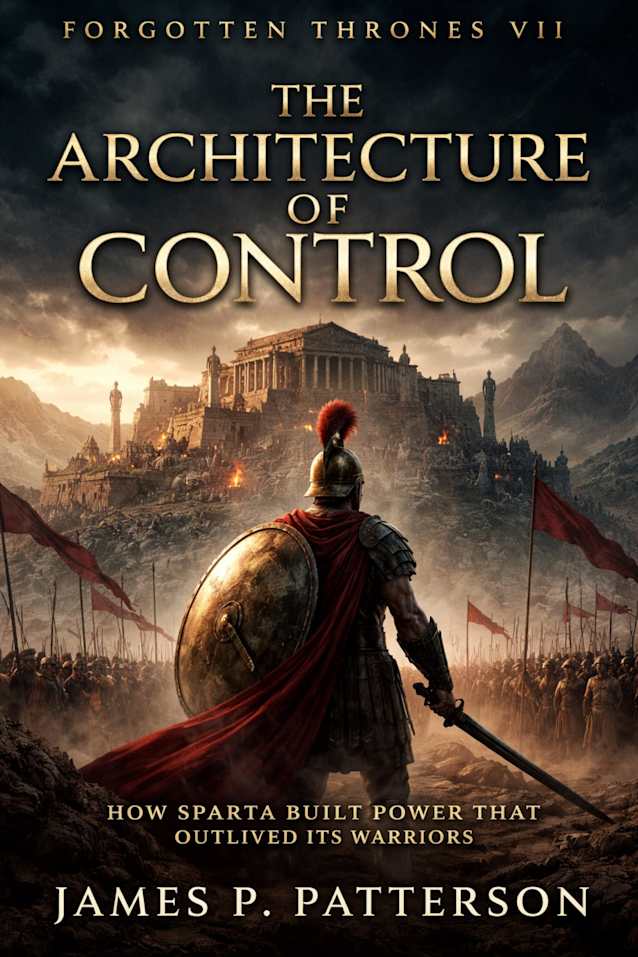
Forgotten Thrones VII: The Architecture of Control (Spartan Command Book 7)
About
Sparta did not rule through courage. It ruled through design.
In Forgotten Thrones VII: How Sparta Engineered Obedience, James P. Patterson dismantles the myth of the fearless Spartan warrior and replaces it with something far more unsettling. A civilization built not on heroism, but on systems. Systems that removed choice, structured fear, normalized deprivation, and conditioned obedience long before battle was ever joined.
This is not a book about famous last stands or legendary kings. It is an examination of how power is engineered.
Inside, you will discover how Sparta reshaped childhood, identity, discipline, and pain into tools of control. How equality was weaponized to suppress ambition. How obedience was valued above courage. And how a society designed for perfect stability ultimately revealed the limits of rigidity.
Each chapter exposes a different component of the Spartan machine, showing how behavior was shaped not through belief or inspiration, but through environment, habit, and inevitability.
The book also follows the legacy of these ideas beyond Greece. It explores how Rome studied the Spartan system, adopted its strengths, corrected its weaknesses, and built something far more adaptable. In doing so, it reveals why Roman power endured while Spartan dominance quietly faded.
Forgotten Thrones VII is written for readers fascinated by ancient warfare, political systems, leadership, and the hidden mechanics of authority. It is part of the Forgotten Thrones series, which examines how ancient civilizations constructed power not through ideals, but through structure.
This book does not ask whether Sparta was right or wrong.
It explains how it worked.
And once you understand the system, you begin to see it everywhere.