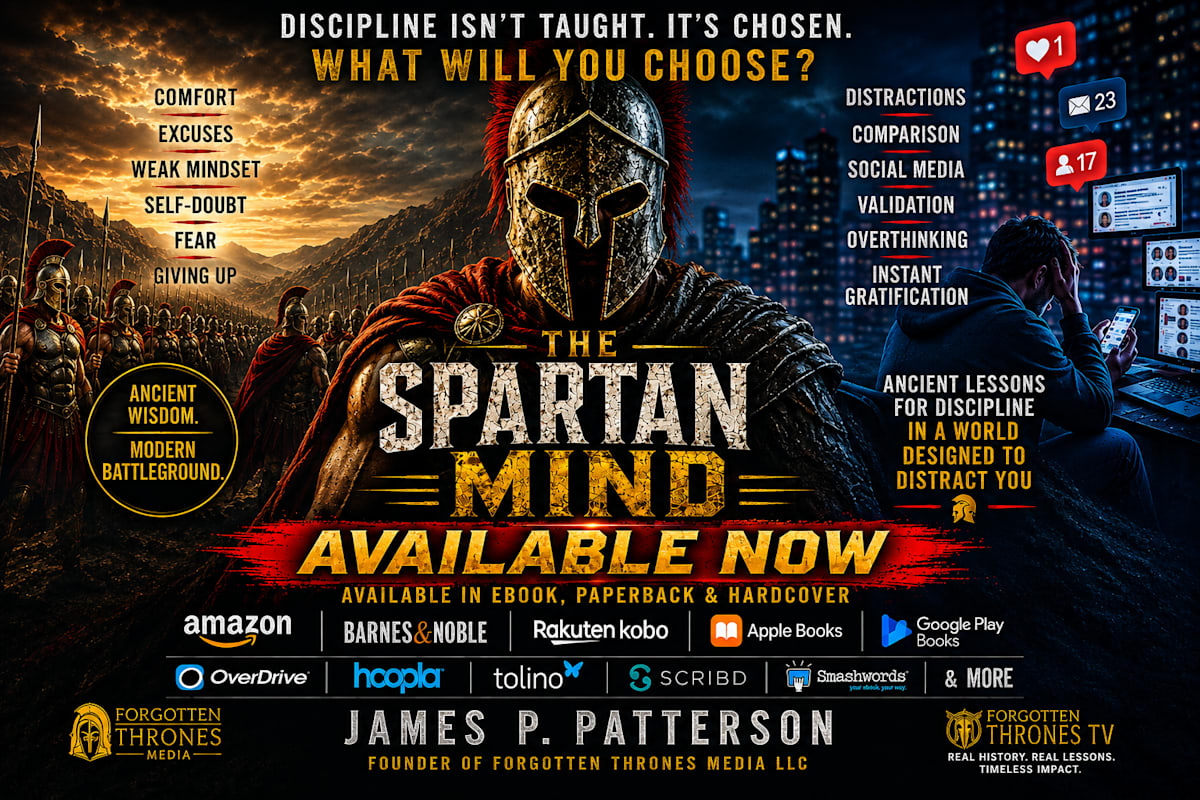
We live in a world that has made almost everything easier, yet staying focused has somehow become harder. Food can arrive at our door without us leaving the house. Entertainment is available every second of every day. A phone in our pocket gives us instant access to information, shopping, games, social media, news, and millions of people competing for our attention. We can avoid boredom almost completely, but many people still feel more distracted, overwhelmed, dissatisfied, and mentally exhausted than ever.
The problem is not technology itself. Technology has created extraordinary opportunities to learn, communicate, build businesses, reach audiences, and improve our lives. The problem begins when convenience removes our need to practice one of the most important human qualities: discipline. When everything is designed to satisfy us quickly, patience becomes harder. When distraction is always available, focus becomes harder. When approval can be measured in likes, comments, and followers, self-worth can become dangerously dependent on other people.
This is where the ancient world, and especially Sparta, becomes interesting. Sparta is often remembered for warriors, shields, spears, and Thermopylae, but beneath the military reputation was a culture built around discipline, endurance, preparation, responsibility, and control over personal impulses. Ancient Sparta was far from perfect, and many of its practices belong firmly in antiquity. Studying history does not mean attempting to recreate everything a civilization did. It means examining principles, consequences, strengths, and failures and deciding what still has value.
One principle remains especially relevant today: discipline is a choice made repeatedly. Nobody can make that choice permanently for you. You can have excellent teachers, books, technology, equipment, coaches, opportunities, and advice, but eventually there comes a moment when nobody else is standing beside you. The alarm goes off. The work still needs to be done. The temptation appears. The excuse enters your mind. Then you decide what happens next.
Most of us will never stand in a shield wall or march across ancient Greece carrying a spear, but we still face battles of our own. They simply look different. Modern enemies of discipline include distraction, comparison, procrastination, self-doubt, fear, excuses, overthinking, instant gratification, and the endless desire for validation. These forces do not arrive with armies. They appear through ordinary moments. You sit down to work and instinctively reach for your phone. You begin pursuing something difficult and immediately compare your progress with someone who has been doing it for ten years. You create something meaningful, but instead of judging the work by your own standards, you immediately look for likes, views, and comments.
This is the modern battlefield for discipline. The weapons have changed, but human nature has not.
Attention has become one of the most valuable commodities in the modern economy. Every notification invites us to look. Every recommendation offers another video. Every feed provides another post. Every platform wants another minute of our time. None of these tools is inherently bad, but they become dangerous when we stop controlling how we use them. A disciplined mind does not require abandoning technology. It requires deciding who is actually in command. Do you pick up your phone because you intentionally need it, or because your hand reaches for it automatically? Do you use social media, or does social media control your attention? Can you work on something important for an hour without checking whether somebody reacted to something you posted?
Those questions reveal more about modern discipline than most motivational speeches ever will.
Another major challenge is our dependence on motivation. Motivation can be powerful, but it is unreliable. Some mornings we wake up ready to conquer everything in front of us. Other mornings we are tired, frustrated, distracted, discouraged, or simply uninterested. If our behavior depends entirely on how we feel, then our emotions become our commander. Discipline operates differently. Discipline means the decision was already made. You said you would exercise, so you exercise. You said you would write, so you write. You said you would save money, so you save it. You said you would finish the project, so you continue.
That does not mean ignoring exhaustion, health, or legitimate reasons to change a plan. It means refusing to let temporary discomfort become a permanent excuse. One of the strongest lessons we can extract from the Spartan ideal is that character becomes most visible when doing what we said we would do becomes inconvenient.
Comparison creates another modern challenge. We now have unprecedented access to other people's lives, but most of what we see is carefully selected. We see victories, promotions, transformations, vacations, successful businesses, growing audiences, and finished products. Then we compare those visible results with our unfinished process. That comparison can destroy momentum. Someone will always have more money. Someone will always have a larger audience. Someone will always be stronger, younger, faster, more experienced, or further ahead. If success depends on defeating everyone around us, we create a competition with no finish line.
A disciplined person learns to measure progress differently. The better questions are more personal: Am I improving? Did I keep my commitment? Did I learn from the failure? Did I move forward? Am I stronger than I was before? Those questions create a standard we can actually control.
Modern life also encourages us to eliminate friction whenever possible. In many ways, that is a good thing. Nobody needs to romanticize unnecessary suffering. But there is an important difference between removing pointless hardship and becoming incapable of tolerating discomfort. Growth still requires friction. Learning something new can be frustrating. Building a career takes time. Writing a book requires working when you would rather do something else. Building a business requires uncertainty. Improving your health requires repeated choices. Repairing relationships often requires uncomfortable conversations.
If discomfort automatically becomes a signal to stop, growth becomes extremely difficult. A stronger mindset asks a different question: Is this discomfort building something worthwhile? If the answer is yes, then discomfort may not be standing in the way. It may actually be part of the path.
Developing a more disciplined mind does not require ancient armor or extreme training. It begins with ordinary choices. Remove unnecessary distractions when you work. Put the phone somewhere else. Decide when you will use social media instead of responding to it constantly. Establish small commitments and keep them. Finish things. Become comfortable saying no. Stop requiring applause before deciding whether your work has value.
Most importantly, learn to trust yourself. Every promise you keep to yourself strengthens that trust. Every promise you repeatedly break weakens it. Discipline is built through evidence. Give yourself evidence that you finish. Give yourself evidence that you can tolerate difficulty. Give yourself evidence that failure does not destroy you. Give yourself evidence that you can continue even when the reward is not immediate.
Over time, the difficult thing may not become easy. You simply become stronger.
The ancient Spartans lived in a world radically different from ours, but one struggle has survived every technological revolution in human history: the struggle to control ourselves. Comfort will always be available. Excuses will always be available. Distractions, comparison, fear, and instant gratification will always be available. The opportunity to choose differently will also remain available.
Discipline is not something we acquire once and permanently possess. It is demonstrated through the choices we make repeatedly. The battlefield has changed, but the decision has not.
What will you choose?
James P. Patterson is the author of The Spartan Mind: Ancient Lessons for Discipline in a World Designed to Distract You. The book explores how principles of discipline, resilience, responsibility, focus, and self-control drawn from the Spartan world can be applied to the challenges of modern life.
[Get The Spartan Mind — https://linktw.in/CLgQiD]
Published by Forgotten Thrones Media LLC.